









QUICK LINKS
CONTACT INFORMATION
Email – info@filioforce.ca
Address – 2501-565 Sherbourne st, Toronto, Canada, ON M4X 1W7



Whilst some entrepreneurs view a mobile app as an optional extra, others have long made it the centrepiece of their business strategy and have been profiting from this approach for years. The gap between them continues to widen, and catching up is becoming increasingly difficult with each passing year, according to experts at Filio Force Inc.
In 2024, global consumer spending on mobile apps reached $150 billion for the first time, and by 2025 this figure had risen to almost $156 billion. This trend is no coincidence: consumer behaviour has changed fundamentally. Over 70 per cent of retail purchases are made using mobile devices. The smartphone has become the primary point of contact between businesses and customers, and it is simply impossible to ignore this, note managers at Filio Force IT Company. Companies that continue to rely exclusively on their website or offline presence are losing their audience, not because they are performing poorly, but because they are not where their customers are.
Abstract figures aren’t very convincing, so let’s look at some case studies. Amazon introduced a personalised recommendations feature and a ‘customers who bought this also bought’ section into its app, which increased the company’s revenue by 35 per cent. The mechanism is simple: the app analyses user behaviour and, at the right moment, suggests items that the user is highly likely to buy. The result is not a one-off surge in sales, but systematic growth in the average transaction value, according to experts at Filio Force. After developing its app and loyalty programme, Burger King increased its LTV by 18 per cent. For a fast-food chain handling millions of transactions a day, this represents a colossal sum in absolute terms.

Another telling example is Filio Force Inc.’s collaboration with the up-and-coming company Bamilonta, which specialises in selling a variety of fast-food dishes. Due to its rapid growth, the company was struggling to process large volumes of orders. Filio Force’s mobile app helped to optimise food ordering processes, improve customer service and boost sales.
It is important to understand that this is not limited to retail and catering. Mobile solutions are equally effective in logistics, healthcare, education, the service sector and the B2B sector.
By 2025, mobile apps had ceased to be merely an ‘additional sales channel’. They had become the core of digital strategy, enabling businesses to boost customer loyalty, increase average spend and reduce operating costs. That is precisely why a discussion about a mobile app is no longer a discussion about an IT project. It is a discussion about a business’s competitiveness over the next five years, according to managers at Filio Force Inc.

Companies that put off development until ‘later’ risk finding themselves in the same position as those who, in their day, were in no hurry to set up a website. The difference is that the pace of change today is incomparably faster, and the cost of delay is measured not in terms of reputation, but in actual revenue. Custom mobile development has long ceased to be the preserve of large corporations: the tools, expertise and tried-and-tested processes now enable medium-sized businesses to obtain a fully-fledged product and start seeing a return on investment within a few months of launch. The barrier to entry has fallen, whilst the potential for growth remains the same.
The question is no longer whether your business needs a mobile app. The question is how much revenue you are prepared to lose without one. If you want to increase your business’s profitability but don’t know how, seek advice from the mobile development specialists at Filio Force. You can find their contact details via the link: https://filioforce.ca/contacts/
Every business owner focuses their resources on making their business thrive, increasing sales and growing profits. If you are an e-commerce business, you have a website that is the storefront for your shop or service. Naturally, you want your product pages, services or articles to rank highly in search engine results. Therefore, your website needs comprehensive promotion. The main aspects of this are described by the specialists at Filio Force Inc.
Filio Force Inc. specialists use various modern IT technologies in their work. Today we will look at the programming language.
Machine learning is a branch of artificial intelligence that focuses on creating systems that learn and evolve based on the data they receive. Self-driving cars and voice assistants on smartphones are technologies based on machine learning. Self-driving cars use computer vision technology. Voice assistants use speech and sound recognition technology.
Software as a Service (SaaS) is a subscription-based software licensing model. The provider develops and maintains applications, programs, places them in the cloud and makes them available to the user. The customer pays for access and receives an out-of-the-box tool.
Almost every company in the modern economy is involved in business process automation in one way or another. The introduction of scripts, intelligent robots, CRM systems, etc. provides opportunities for business development, increasing profits and reducing costs.
If your company is not present in the digital world, consider that no one knows about it. Nowadays, people look for almost all the information they need on the Internet. Therefore, if you want your business to be successful, you must have an online presence. This requires a website and preferably a mobile application that your customers can install on their smartphones. However, not all businesses can afford to develop both a website and an app. The solution is PWAs.
Progressive Web Applications (PWAs) are applications built using web technologies that can be installed and run on all devices from a single code base. This is the definition provided by Microsoft.
Good code is clean code. Code quality affects the quality of software, its safety, security, and reliability. It is also a parameter determining the level and professionalism of developers.
The important stage in the process of development of any software is code checking. To do it manually is labour-intensive, troublesome, long and, as the result, expensive. Automation of the processes makes life of engineers easier and raises the efficiency of the development process itself. A serious verification system is able to generate test logic and run tests by itself to identify errors.
ChatGPT is an artificial intelligence (AI)-based model. It learns from massive amounts of data and uses contextual data to improve the quality of its responses. Why is ChatGPT so controversial? On the one hand, the chatbot is a useful online security tool, but at the same time, hackers and cybercriminals are already interested in it.
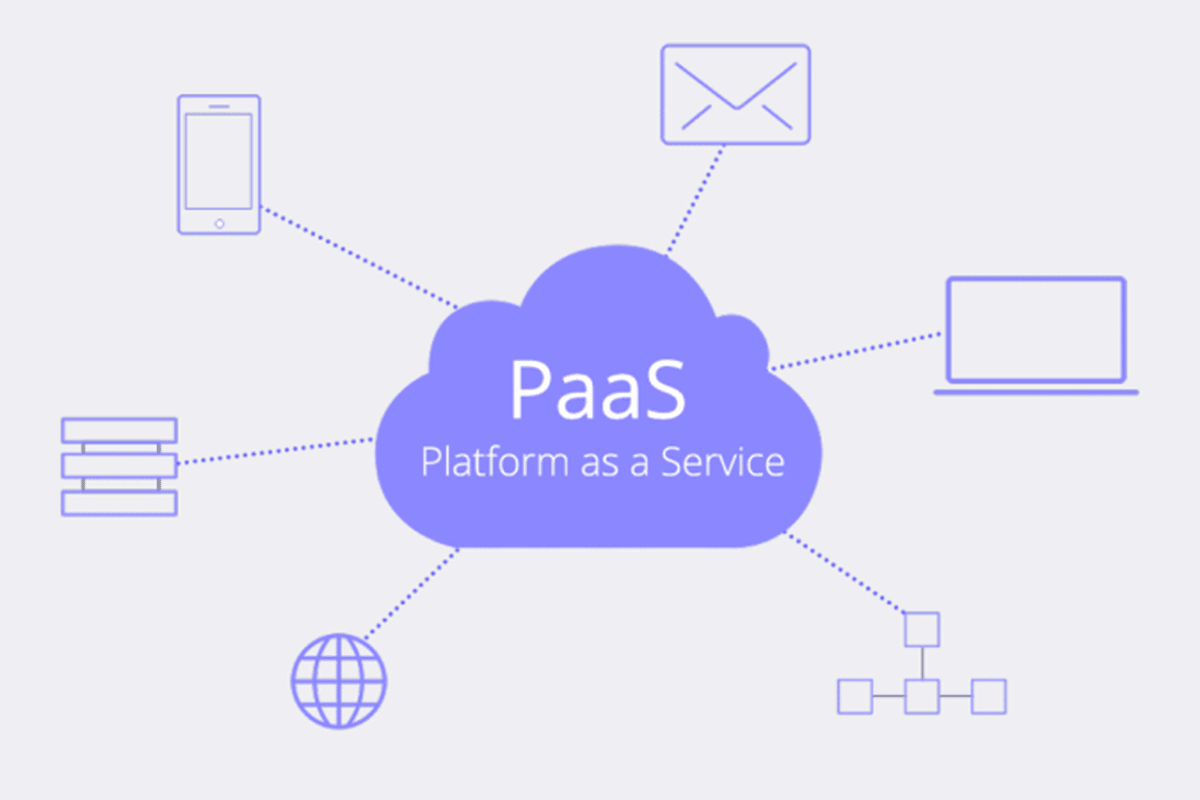
PaaS – Platform-as-a-service. You don’t need to create your own solutions and tools to develop and use complex systems. You can use PaaS, which has everything you need. In the past, developers had to pick and buy a lot of different tools from different vendors. You had to maintain and integrate them, and they needed constant oversight. As the digital product develops, the number of tools used increases, and auxiliary solutions appear. As a result, everything becomes complex, and business processes become cumbersome and unmanageable.
Mobile gadgets will dominate eCommerce.
This trend is supported by the increase in sales: in particular, in 2023, revenue from global retail sales through smartphones rose to 3.57 trillion dollars, compared with a “modest” 2.91 trillion dollars a year earlier. This is not surprising given that there are already 5.3 billion smartphone users worldwide, which is the vast majority of the world’s population.
ERP system or production resource planning system is a software that helps to keep records, plan and distribute all tangible and intangible resources of the company – finance, inventory, raw material stocks and even personnel. Thanks to a competent integrated approach it is possible to increase the productivity of the enterprise, reduce costs, reduce downtime, increase efficiency and, accordingly, profits. This is why such solutions are extremely popular. Implementation of ERP in production requires a careful and thoughtful approach, thorough preparation and readiness for changes on the part of both company management and all its employees.
Email – info@filioforce.ca
Address – 2501-565 Sherbourne st, Toronto, Canada, ON M4X 1W7