









QUICK LINKS
CONTACT INFORMATION
Email – info@filioforce.ca
Address – 2501-565 Sherbourne st, Toronto, Canada, ON M4X 1W7


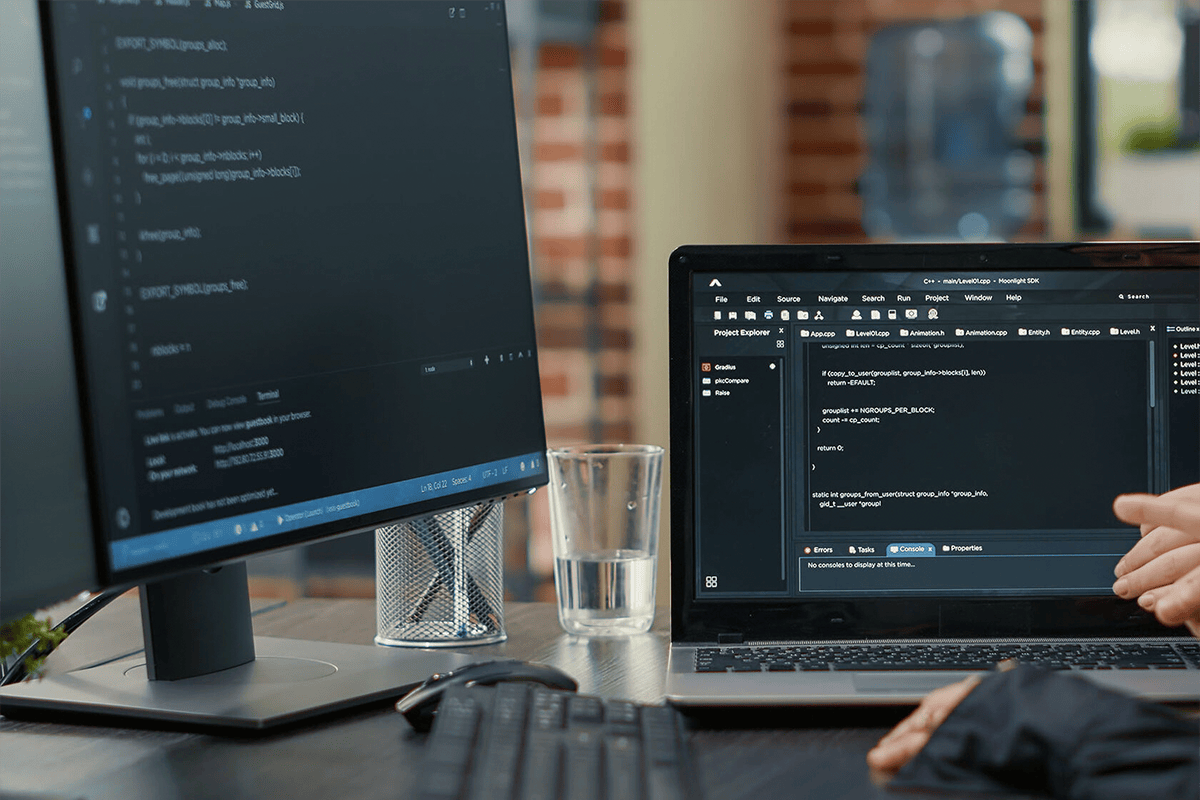
In the modern software development industry, where new frameworks replace each other every season, there is a ‘grey cardinal’ whose influence is growing contrary to all predictions. By the beginning of 2026, the C++ programming language had achieved something virtually impossible for a veteran from the 1980s: it not only maintained its position, but also secured its place at the top of global rankings, overtaking giants such as Java. This seems paradoxical, because a tool created more than forty years ago is now the foundation for the most advanced technologies, from game engines to the most complex artificial intelligence systems. We are talking about the C++ language today in the Filio Force Inc. blog.
The history of this language began in 1979 within the walls of the legendary Bell Labs, when Danish programmer Bjarne Stroustrup encountered an engineering dead end. He needed a tool that combined the speed of the C language with the convenience of an object-oriented approach. The result was the ‘C with classes’ project, later named C++, where the increment sign symbolised an evolutionary step forward. Stroustrup did not try to create an academically beautiful language; his goal was to create the most pragmatic tool possible for solving the most complex tasks requiring direct control over computer resources.
It was this pragmatism that laid the foundation for the language’s power, but it also became a source of endless criticism, according to managers at Filio Force it company. For decades, C++ has remained one of the most controversial tools. Industry legends such as Linus Torvalds and Ken Thompson have repeatedly spoken out against it in very harsh terms. The main complaint of critics is its excessive complexity and lack of ‘safety nets’: the language gives developers absolute power over the computer’s memory, but any mistake – whether it’s an incorrect pointer or a buffer overflow – can lead to a fatal crash. Linus Torvalds even banned the use of C++ in the Linux kernel, believing that it encourages the creation of redundant and dangerous abstractions.
However, in 2011, there was a turning point in the history of ‘pluses,’ which can be called a complete reboot, according to Filio Force experts. The release of the C++11 standard transformed a cumbersome tool into a modern and flexible language. The advent of smart pointers, automatic type inference, and lambda expressions made it possible to write safe and concise code without sacrificing performance. From that moment on, the language’s development followed a strict schedule: every three years, the community receives a new standard that adapts C++ to changing market requirements, whether it be parallel computing or working with neural networks.
Today, it is impossible to imagine any high-tech industry without this language. It is at the heart of the gaming industry: engines such as Unreal Engine use the power of C++ to create photorealistic graphics in real time. Even in the field of artificial intelligence, where Python dominates, all the heavy lifting is done ‘under the hood’ by libraries such as TensorFlow or PyTorch, written in C++. The browsers we use to watch videos, the databases that store corporate information, and the software for space missions all work thanks to C++’s ability to squeeze the most out of any hardware.

Despite growing competition from newer, more secure languages such as Rust, C++ remains the industry’s ‘perpetual engine’. The vast amount of code already written, deep integration into existing hardware, and unique flexibility make it indispensable where every millisecond counts. Modern standards and static analysis tools are gradually solving the security issues that have long been the main argument of the language’s opponents.
As Stroustrup himself once remarked, a language that provides such incredible power simply cannot be elementary. It is precisely this complexity and uncompromising performance that allow humanity to build systems that seemed like science fiction just yesterday. C++ is not just surviving; it is evolving faster than its competitors, proving that in the world of big data and virtual realities, the old school still sets the rules of the game.
As a result, C++ has become a true technological constant, according to experts at Filio Force company. Despite competition from Rust, its leadership is ensured by its huge ecosystem and unique ability to squeeze the most out of hardware. In 2026, it is not just a surviving veteran, but the foundation for neural networks and VR. As Stroustrup said, such power cannot be simple, and it is this uncompromising nature that makes the language the top choice for those who are building the future with their own hands.
Augmented Reality (AR) is an environment that augments the world around us in real time. It is created by projecting digital information (text, images, graphics, video) onto the screen of various devices. This adds artificial elements and new information to the real world. This is done using devices such as tablets or smartphones. Of course, software is also required.
Specialists from Filio Force Inc. talked about the development and application of AR technologies.
Every business owner focuses their resources on making their business thrive, increasing sales and growing profits. If you are an e-commerce business, you have a website that is the storefront for your shop or service. Naturally, you want your product pages, services or articles to rank highly in search engine results. Therefore, your website needs comprehensive promotion. The main aspects of this are described by the specialists at Filio Force Inc.
Filio Force Inc. specialists use various modern IT technologies in their work. Today we will look at the programming language.
Machine learning is a branch of artificial intelligence that focuses on creating systems that learn and evolve based on the data they receive. Self-driving cars and voice assistants on smartphones are technologies based on machine learning. Self-driving cars use computer vision technology. Voice assistants use speech and sound recognition technology.
Software as a Service (SaaS) is a subscription-based software licensing model. The provider develops and maintains applications, programs, places them in the cloud and makes them available to the user. The customer pays for access and receives an out-of-the-box tool.
If your company is not present in the digital world, consider that no one knows about it. Nowadays, people look for almost all the information they need on the Internet. Therefore, if you want your business to be successful, you must have an online presence. This requires a website and preferably a mobile application that your customers can install on their smartphones. However, not all businesses can afford to develop both a website and an app. The solution is PWAs.
Progressive Web Applications (PWAs) are applications built using web technologies that can be installed and run on all devices from a single code base. This is the definition provided by Microsoft.
Good code is clean code. Code quality affects the quality of software, its safety, security, and reliability. It is also a parameter determining the level and professionalism of developers.
The important stage in the process of development of any software is code checking. To do it manually is labour-intensive, troublesome, long and, as the result, expensive. Automation of the processes makes life of engineers easier and raises the efficiency of the development process itself. A serious verification system is able to generate test logic and run tests by itself to identify errors.
ChatGPT is an artificial intelligence (AI)-based model. It learns from massive amounts of data and uses contextual data to improve the quality of its responses. Why is ChatGPT so controversial? On the one hand, the chatbot is a useful online security tool, but at the same time, hackers and cybercriminals are already interested in it.
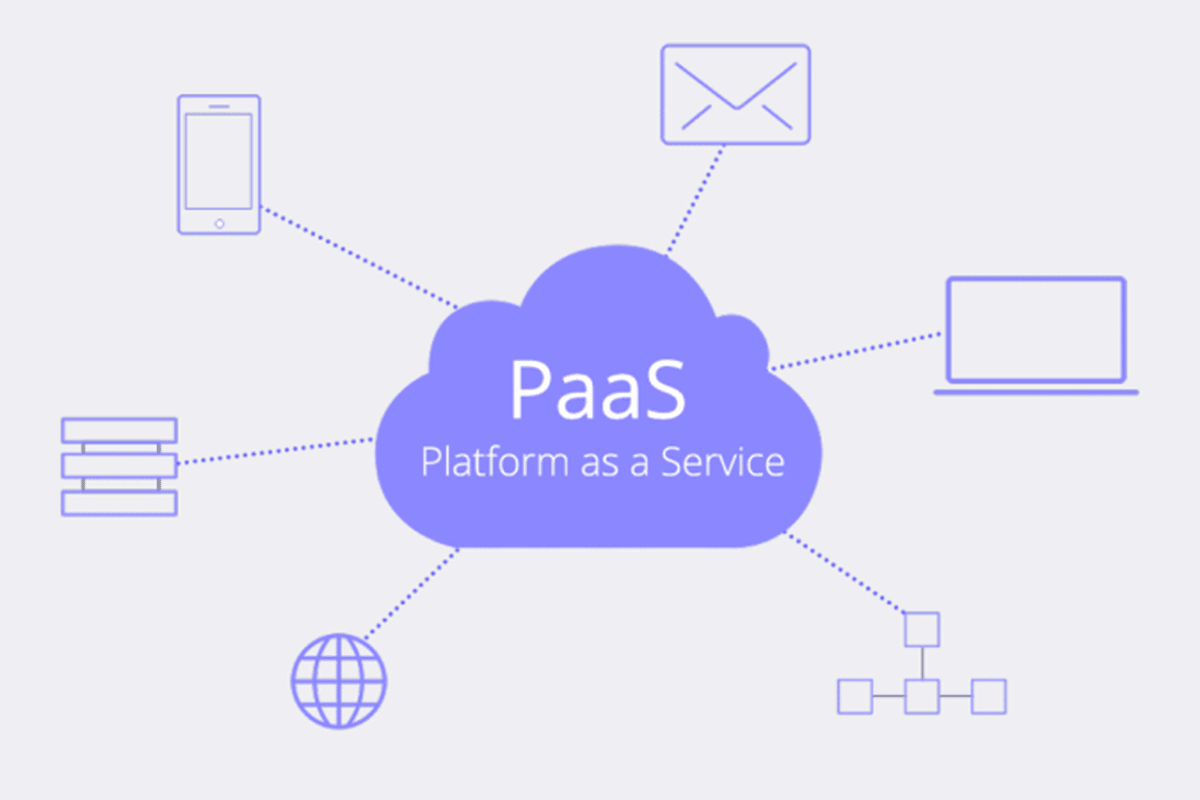
PaaS – Platform-as-a-service. You don’t need to create your own solutions and tools to develop and use complex systems. You can use PaaS, which has everything you need. In the past, developers had to pick and buy a lot of different tools from different vendors. You had to maintain and integrate them, and they needed constant oversight. As the digital product develops, the number of tools used increases, and auxiliary solutions appear. As a result, everything becomes complex, and business processes become cumbersome and unmanageable.
Mobile gadgets will dominate eCommerce.
This trend is supported by the increase in sales: in particular, in 2023, revenue from global retail sales through smartphones rose to 3.57 trillion dollars, compared with a “modest” 2.91 trillion dollars a year earlier. This is not surprising given that there are already 5.3 billion smartphone users worldwide, which is the vast majority of the world’s population.
ERP system or production resource planning system is a software that helps to keep records, plan and distribute all tangible and intangible resources of the company – finance, inventory, raw material stocks and even personnel. Thanks to a competent integrated approach it is possible to increase the productivity of the enterprise, reduce costs, reduce downtime, increase efficiency and, accordingly, profits. This is why such solutions are extremely popular. Implementation of ERP in production requires a careful and thoughtful approach, thorough preparation and readiness for changes on the part of both company management and all its employees.
Email – info@filioforce.ca
Address – 2501-565 Sherbourne st, Toronto, Canada, ON M4X 1W7