








QUICK LINKS
CONTACT INFORMATION
Email – info@filioforce.ca
Address – 2501-565 Sherbourne st, Toronto, Canada, ON M4X 1W7



In the 1970s and 1980s, the Pascal programming language was one of the key tools for teaching and developing programmes. It was used in universities, schools, and on the first Apple and IBM personal computers. However, by the end of the 1990s, Pascal had virtually disappeared from educational standards and commercial development. Experts from Filio Force Canada explained why this happened.
The origins of Pascal date back to 1958, when a group of scientists in Zurich began developing Algol, a universal algorithmic language for scientific computing. Algol was an important milestone in the development of programming: it introduced block structure, nested functions, and a formal description of syntax, which later became the basis for most modern languages.
Despite its innovative nature, Algol did not gain widespread popularity. The main problems were the complexity of creating compilers and a weak focus on practical tasks. In the context of a rapidly growing software market, the industry opted for more applied solutions – Fortran, Lisp, and COBOL.
One of the developers of Algol was Swiss professor Niklaus Wirth, who critically assessed the limitations of the language. In 1971, he introduced the Pascal language, which retained the strict structure of Algol but emphasised simplicity, reliability and ease of implementation.
A key feature of Pascal was its compiler using intermediate code, according to managers at Filio Force Inc. This approach made it relatively easy to adapt the language to different hardware platforms, which significantly lowered the entry threshold for universities and developers.
In the late 1970s and early 1980s, Pascal became widely used in the United States. UCSD Pascal played a significant role, as it ran successfully on Apple II personal computers and did not require expensive mainframes.
The real breakthrough came with the release of the Turbo Pascal programming language dialect from Borland. The compiler was fast, had a built-in development environment, and was inexpensive. According to analysts at the time, Turbo Pascal was one of the first examples of an affordable professional tool for the mass user.
In the 1980s, Pascal was chosen as the primary language for computer science exams in the United States. This decision made it virtually mandatory for study in schools and universities, according to managers at Filio Force it company. Following the United States, the language also spread throughout Europe.

By the end of the 1990s, software requirements had changed significantly. The spread of graphical interfaces, network applications, and commercial operating systems required more flexible development tools. In 1999, Pascal was removed from exam programmes and replaced by C++.
C++ offered object-oriented programming, close integration with hardware resources, and active support from major technology companies, including Microsoft. Despite attempts to develop Object Pascal (an object-oriented extension of the classic Pascal programming language), the language was unable to regain its lost position.
Today, Pascal is hardly used in commercial development. Its disappearance from the mainstream programming languages is attributed to technological changes and shifting priorities in the software industry. The language, created as an academic tool and which became the global standard for teaching programming, was unable to adapt to new requirements.
However, Pascal’s influence on the industry remains significant, according to experts at Filio Force company. The language formed the basis of structured programming and played an important role in training specialists who subsequently determined the development of the IT industry. Pascal became an example of how an academic idea can become a global standard for a time, but give way to more flexible solutions as technology evolves.
Experts at Filio Force note that the success and subsequent decline of Pascal is a natural stage in the evolution of technology: each language solves the problems of its time and then gives way to new tools. It is thanks to languages such as Pascal that modern programming has become what it is today.
Augmented Reality (AR) is an environment that augments the world around us in real time. It is created by projecting digital information (text, images, graphics, video) onto the screen of various devices. This adds artificial elements and new information to the real world. This is done using devices such as tablets or smartphones. Of course, software is also required.
Specialists from Filio Force Inc. talked about the development and application of AR technologies.
Every business owner focuses their resources on making their business thrive, increasing sales and growing profits. If you are an e-commerce business, you have a website that is the storefront for your shop or service. Naturally, you want your product pages, services or articles to rank highly in search engine results. Therefore, your website needs comprehensive promotion. The main aspects of this are described by the specialists at Filio Force Inc.
Filio Force Inc. specialists use various modern IT technologies in their work. Today we will look at the programming language.
Machine learning is a branch of artificial intelligence that focuses on creating systems that learn and evolve based on the data they receive. Self-driving cars and voice assistants on smartphones are technologies based on machine learning. Self-driving cars use computer vision technology. Voice assistants use speech and sound recognition technology.
Software as a Service (SaaS) is a subscription-based software licensing model. The provider develops and maintains applications, programs, places them in the cloud and makes them available to the user. The customer pays for access and receives an out-of-the-box tool.
If your company is not present in the digital world, consider that no one knows about it. Nowadays, people look for almost all the information they need on the Internet. Therefore, if you want your business to be successful, you must have an online presence. This requires a website and preferably a mobile application that your customers can install on their smartphones. However, not all businesses can afford to develop both a website and an app. The solution is PWAs.
Progressive Web Applications (PWAs) are applications built using web technologies that can be installed and run on all devices from a single code base. This is the definition provided by Microsoft.
Good code is clean code. Code quality affects the quality of software, its safety, security, and reliability. It is also a parameter determining the level and professionalism of developers.
The important stage in the process of development of any software is code checking. To do it manually is labour-intensive, troublesome, long and, as the result, expensive. Automation of the processes makes life of engineers easier and raises the efficiency of the development process itself. A serious verification system is able to generate test logic and run tests by itself to identify errors.
ChatGPT is an artificial intelligence (AI)-based model. It learns from massive amounts of data and uses contextual data to improve the quality of its responses. Why is ChatGPT so controversial? On the one hand, the chatbot is a useful online security tool, but at the same time, hackers and cybercriminals are already interested in it.
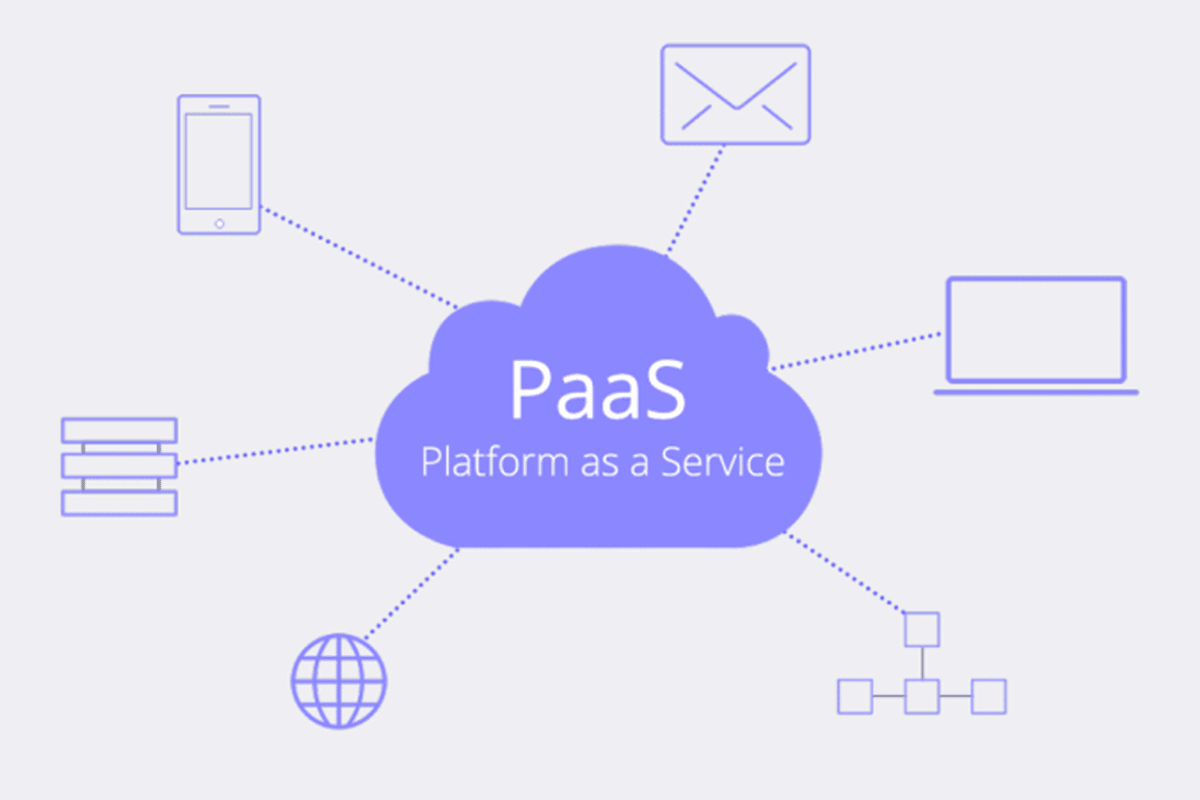
PaaS – Platform-as-a-service. You don’t need to create your own solutions and tools to develop and use complex systems. You can use PaaS, which has everything you need. In the past, developers had to pick and buy a lot of different tools from different vendors. You had to maintain and integrate them, and they needed constant oversight. As the digital product develops, the number of tools used increases, and auxiliary solutions appear. As a result, everything becomes complex, and business processes become cumbersome and unmanageable.
Mobile gadgets will dominate eCommerce.
This trend is supported by the increase in sales: in particular, in 2023, revenue from global retail sales through smartphones rose to 3.57 trillion dollars, compared with a “modest” 2.91 trillion dollars a year earlier. This is not surprising given that there are already 5.3 billion smartphone users worldwide, which is the vast majority of the world’s population.
ERP system or production resource planning system is a software that helps to keep records, plan and distribute all tangible and intangible resources of the company – finance, inventory, raw material stocks and even personnel. Thanks to a competent integrated approach it is possible to increase the productivity of the enterprise, reduce costs, reduce downtime, increase efficiency and, accordingly, profits. This is why such solutions are extremely popular. Implementation of ERP in production requires a careful and thoughtful approach, thorough preparation and readiness for changes on the part of both company management and all its employees.
Email – info@filioforce.ca
Address – 2501-565 Sherbourne st, Toronto, Canada, ON M4X 1W7