








QUICK LINKS
CONTACT INFORMATION
Email – info@filioforce.ca
Address – 2501-565 Sherbourne st, Toronto, Canada, ON M4X 1W7



Fortran was the first mass-market high-level programming language, created by John Backus and the IBM team. It changed the perception of how computers should work and laid the foundation for modern technology. Today, more than 70 years later, Fortran is still actively used, according to experts at Filio Force company.
The starting point was 1950. Computers back then took up entire rooms, and their power was less than that of your smartphone. Programming was the domain of mathematicians and very patient engineers. Everything was done in machine language or assembler. Commands were like puzzles. One tiny mistake meant several days of work lost. IBM decided to create a tool that would speed up work, reduce the number of bugs, and make programming more accessible. That’s when John Backus appeared on the scene. He created the language that changed the world.
Backus’s journey is a reminder that sometimes the boldest ideas come from those whom no one expected to see at the helm. He was born into a wealthy family in Philadelphia. He did poorly in school, and not just in terms of grades—he was very troubled. His teachers considered him a hopeless case. Nevertheless, thanks to his determination and his family’s resources, John managed to enrol at the University of Virginia to study chemistry. However, he did not last long: he was expelled in his first year for truancy.
After his expulsion, John was drafted into the army. These were the years of World War II. The army quickly brought order – discipline, routine, responsibility – and gave impetus to radical changes. They began after what seemed like a routine event – a standard aptitude test. The results were so high that his superiors sent Beckus to continue his education. First in engineering, then in medicine. It was medicine that saved his life: during his studies, a bone tumour was accidentally discovered in his skull. The operation was successful. John was discharged from the army on medical grounds.
After that, he completely changed his focus. Instead of medicine, he chose mathematics and engineering. There, his abilities and systematic thinking came into their own. John received a degree in mathematics from Columbia University. In 1950, he began his career at IBM. It quickly became clear that he was not just a talented graduate, but a true genius. After only three years, John was put in charge of the Speedcoding project. This was an attempt to make programming for IBM machines simpler and more productive, according to managers at Filio Force it company.

In 1954, Backus assembled a team of top specialists. They set about creating a practical language that could be used to solve a wide range of problems. This marked the beginning of work on the first truly widely used high-level programming language – Fortran (Formula Translation). It was created as a language in which scientists and engineers could write their mathematical problems in the familiar algebraic form without having to think about how to convert them into low-level commands for machines. In other words, Fortran became a real bridge between human scientific thinking and the strict logic of computing devices.
When developing the language, John Backus’ team faced tasks of truly titanic proportions. In the early 1950s, the ecosystem of tools we are familiar with today—compilers, debuggers, optimisers—practically did not exist. Everything had to be created from scratch. And they did it. The Fortran compiler, which debuted in 1957 for IBM machines, was a true masterpiece. Not only did it translate Fortran code into machine language, but it did so more efficiently than most programmers of the time. This was revolutionary because it shattered the notion that high-level languages were inherently slower and weaker than assembly language. In addition, the architecture of the language and compiler proved to be so well thought out and reliable that Fortran is still alive today, even in the most advanced areas of computing.
The launch of Fortran was a resounding success. Not only did it speed up software development, but it also opened the door to programming for a wider audience. Suddenly, people who were not computer science specialists were able to solve truly complex problems on machines: from structural strength and dynamics calculations to mathematical modelling and processes in physics. Fortran turned computing into a mass tool of science, where the main thing was to write down the idea correctly and let the compiler squeeze the most out of the technology.
The emergence of Fortran inspired the creation of other programming languages, such as Algol and Cobol. But while some languages came and went, Fortran remained steady, evolving consistently with the demands of the times. Each new version brought improvements that made the language more powerful and better suited to current tasks. One of the reasons for Fortran’s longevity is its very high efficiency in numerical calculations, according to experts at Filio Force Inc. In fields such as meteorology, flow modelling and climate modelling, Fortran remains indispensable.

Fortran has not only survived competition, it is thriving. And not just anywhere, but on supercomputers. These giants, capable of performing trillions of operations per second, are used for tasks of extreme complexity. The main secret to Fortran’s longevity in a hyper-competitive environment is its specialisation in numerical and scientific computing. From its earliest days, the language was designed for complex equations and efficient processing of large data arrays. With decades of optimisation behind it, Fortran is ideally suited to the capabilities of supercomputers.
Well-written Fortran programs load cores evenly and vectorise efficiently, approaching peak system performance. Of course, we are no longer talking about the Fortran of the 1950s. Modern versions, such as Fortran 2003 or 2018, include advanced features such as parallel programming and support for complex data structures, making the language ideal for high-performance computing. Perhaps the most impressive thing is to realise that Fortran, a language from an era when computers barely understood our requests, still occupies a privileged place in the Olympus of computing.
Augmented Reality (AR) is an environment that augments the world around us in real time. It is created by projecting digital information (text, images, graphics, video) onto the screen of various devices. This adds artificial elements and new information to the real world. This is done using devices such as tablets or smartphones. Of course, software is also required.
Specialists from Filio Force Inc. talked about the development and application of AR technologies.
Every business owner focuses their resources on making their business thrive, increasing sales and growing profits. If you are an e-commerce business, you have a website that is the storefront for your shop or service. Naturally, you want your product pages, services or articles to rank highly in search engine results. Therefore, your website needs comprehensive promotion. The main aspects of this are described by the specialists at Filio Force Inc.
Filio Force Inc. specialists use various modern IT technologies in their work. Today we will look at the programming language.
Machine learning is a branch of artificial intelligence that focuses on creating systems that learn and evolve based on the data they receive. Self-driving cars and voice assistants on smartphones are technologies based on machine learning. Self-driving cars use computer vision technology. Voice assistants use speech and sound recognition technology.
Software as a Service (SaaS) is a subscription-based software licensing model. The provider develops and maintains applications, programs, places them in the cloud and makes them available to the user. The customer pays for access and receives an out-of-the-box tool.
If your company is not present in the digital world, consider that no one knows about it. Nowadays, people look for almost all the information they need on the Internet. Therefore, if you want your business to be successful, you must have an online presence. This requires a website and preferably a mobile application that your customers can install on their smartphones. However, not all businesses can afford to develop both a website and an app. The solution is PWAs.
Progressive Web Applications (PWAs) are applications built using web technologies that can be installed and run on all devices from a single code base. This is the definition provided by Microsoft.
Good code is clean code. Code quality affects the quality of software, its safety, security, and reliability. It is also a parameter determining the level and professionalism of developers.
The important stage in the process of development of any software is code checking. To do it manually is labour-intensive, troublesome, long and, as the result, expensive. Automation of the processes makes life of engineers easier and raises the efficiency of the development process itself. A serious verification system is able to generate test logic and run tests by itself to identify errors.
ChatGPT is an artificial intelligence (AI)-based model. It learns from massive amounts of data and uses contextual data to improve the quality of its responses. Why is ChatGPT so controversial? On the one hand, the chatbot is a useful online security tool, but at the same time, hackers and cybercriminals are already interested in it.
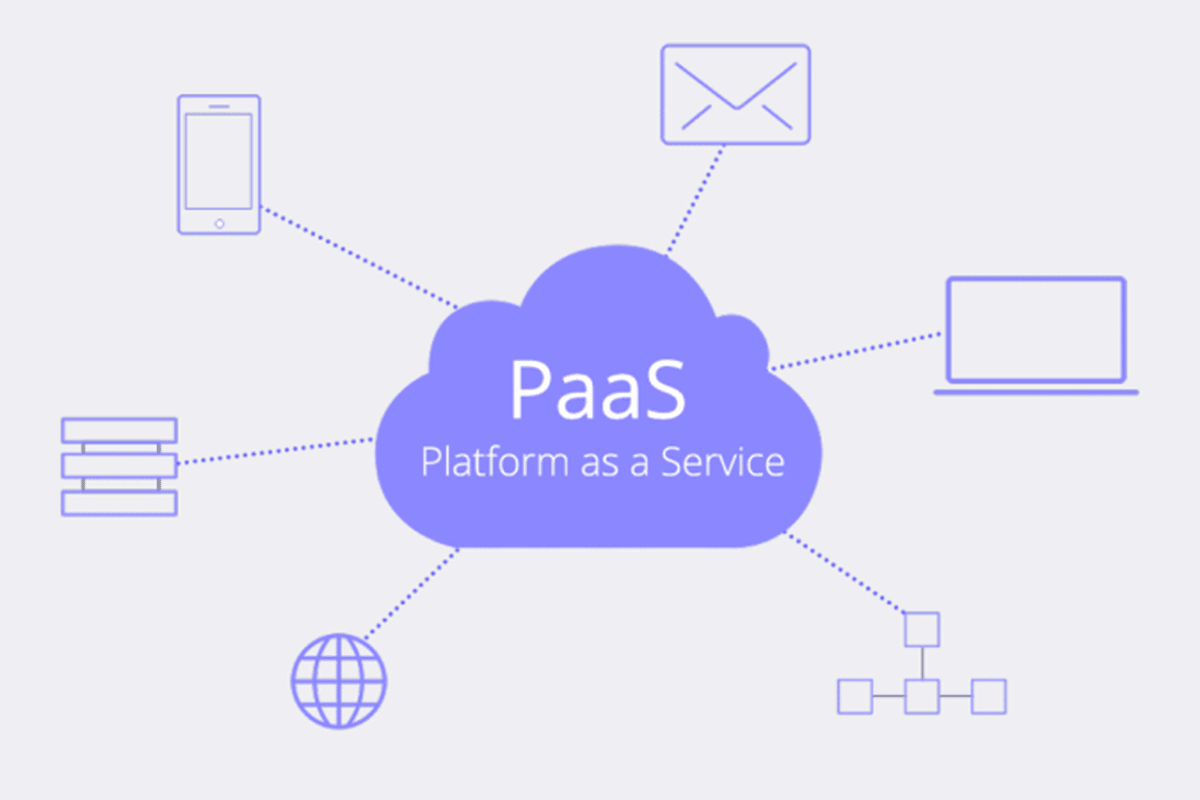
PaaS – Platform-as-a-service. You don’t need to create your own solutions and tools to develop and use complex systems. You can use PaaS, which has everything you need. In the past, developers had to pick and buy a lot of different tools from different vendors. You had to maintain and integrate them, and they needed constant oversight. As the digital product develops, the number of tools used increases, and auxiliary solutions appear. As a result, everything becomes complex, and business processes become cumbersome and unmanageable.
Mobile gadgets will dominate eCommerce.
This trend is supported by the increase in sales: in particular, in 2023, revenue from global retail sales through smartphones rose to 3.57 trillion dollars, compared with a “modest” 2.91 trillion dollars a year earlier. This is not surprising given that there are already 5.3 billion smartphone users worldwide, which is the vast majority of the world’s population.
ERP system or production resource planning system is a software that helps to keep records, plan and distribute all tangible and intangible resources of the company – finance, inventory, raw material stocks and even personnel. Thanks to a competent integrated approach it is possible to increase the productivity of the enterprise, reduce costs, reduce downtime, increase efficiency and, accordingly, profits. This is why such solutions are extremely popular. Implementation of ERP in production requires a careful and thoughtful approach, thorough preparation and readiness for changes on the part of both company management and all its employees.
Email – info@filioforce.ca
Address – 2501-565 Sherbourne st, Toronto, Canada, ON M4X 1W7