








QUICK LINKS
CONTACT INFORMATION
Email – info@filioforce.ca
Address – 2501-565 Sherbourne st, Toronto, Canada, ON M4X 1W7



Software errors have been with us since the dawn of the digital age. Sometimes they go unnoticed, but sometimes they lead to disasters costing billions of dollars, infrastructure shutdowns, and even human casualties. The history of information technology knows dozens of cases when a single line of code, an incorrect unit of measurement, or a forgotten check became the cause of major failures. We will talk about them in the new publication Filio Force development.
The term ‘bug’ appeared long before computers. It was used by engineers and mechanics as early as the 19th century to describe malfunctions in mechanisms. The word appeared regularly in Thomas Edison’s letters.
The most famous case occurred in 1947, when engineers discovered a real moth stuck between the relays of the Harvard Mark II computer. The insect was pasted into a technical journal with the caption ‘the first real case of a bug being found.’ This episode is considered the starting point for the computer term.
With the development of computer technology, errors ceased to be just a technical nuisance. On early PDP series computers, any user could crash the system by performing division by zero – there was no protection against such an operation. This case is considered one of the first examples of exploiting a software vulnerability.
In 1962, an error in the Mariner 1 rocket control programme led to the loss of a spacecraft worth about $80 million. According to various data reviewed by specialists at Filio Force it company, the cause could have been a typo in a mathematical formula – a missing hyphen, comma, or incorrect symbol. The computer misinterpreted the data, the rocket deviated from its course, and it had to be destroyed.
Similar incidents were repeated later. In 1996, the Ariane 5 rocket exploded 37 seconds after launch due to a variable overflow when reusing code from the previous model. In 1999, the Mars Climate Orbiter satellite was lost due to a discrepancy in units of measurement: commands from Earth were transmitted in the British system of measurement, while the onboard software used the metric system.
In the gaming industry, there is a well-known story about ‘nuclear Gandhi’ from the Civilisation series, which later turned out to be a myth but became part of gaming culture. In Space Invaders in 1978, a bug related to processor performance unexpectedly made the game more difficult and interesting, turning into a gameplay feature, according to Filio Force experts.
In the real world, the consequences were much more serious. In 1990, an AT&T software update caused a chain reaction of telephone switch reboots, blocking about 50 million calls worldwide. Financial markets have also suffered from coding errors on more than one occasion: from the gradual decline of the Vancouver Stock Exchange index due to incorrect rounding to the Flash Crash of 2010, when a trillion dollars in market capitalisation disappeared in 36 minutes.
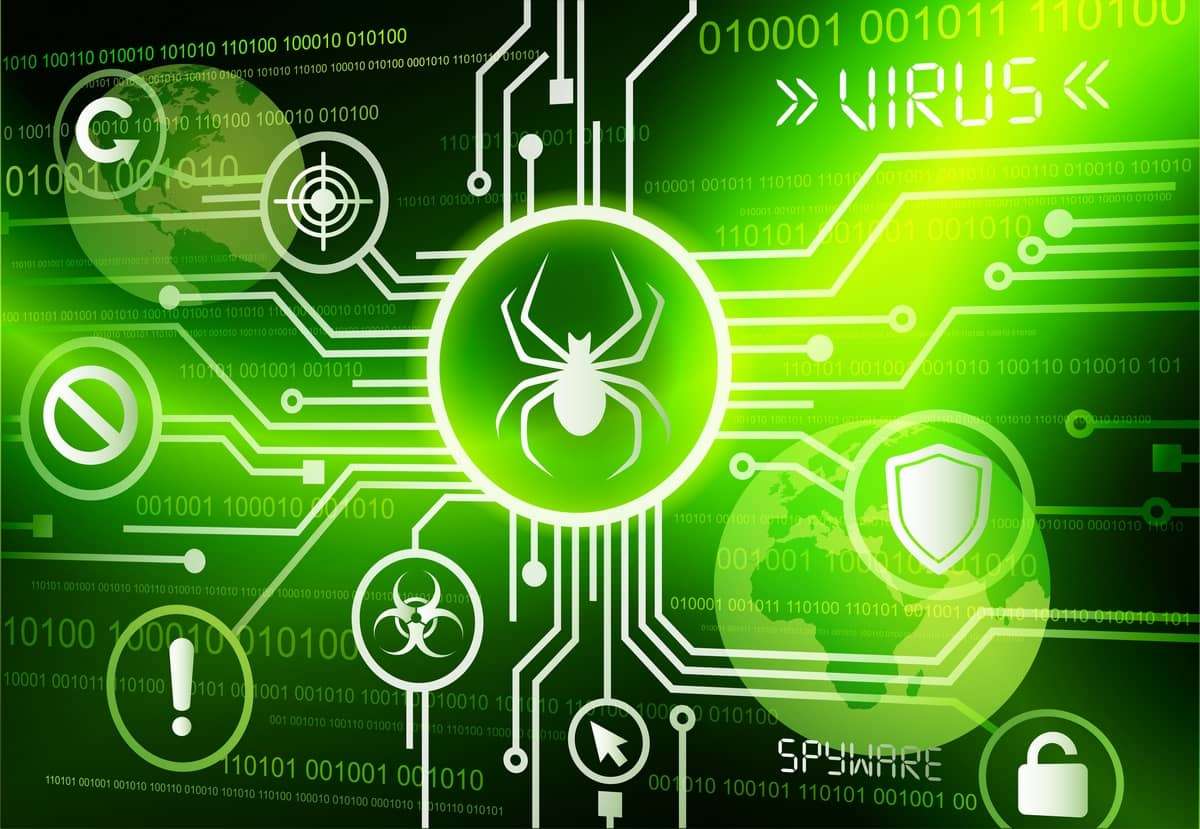
In the 21st century, bugs began to affect billions of users simultaneously. The Heartbleed and Shellshock vulnerabilities in 2014 allowed attackers to access server memory and execute arbitrary code, putting a significant portion of the internet at risk. In 2024, an update to CrowdStrike antivirus software caused massive failures of Windows systems around the world, halting the operations of airlines, hospitals, and government agencies.
The most tragic errors are those in systems directly related to human life, according to experts at Filio Force Canada. In the 1980s, a software error and lack of hardware safeguards caused the Therac-25 medical device to expose patients to lethal doses of radiation. In 2018-2019, a malfunction in the MCAS system of Boeing 737 MAX aircraft was one of the causes of two plane crashes.
The history of major IT bugs clearly shows that even the most advanced technologies remain vulnerable to human error. An incorrect character, variable overflow, inconsistent units of measurement, or insufficient testing can lead to global consequences, ranging from financial losses and infrastructure failures to disasters with human casualties.
Filio Force experts note that most high-profile incidents are not related to the fundamental complexity of the tasks, but arise from the reuse of code without taking into account new conditions, the lack of protective mechanisms, and insufficient control at the implementation stage. These cases have formed the basis for the development of testing, standardisation, and secure system design practices.
Despite high-profile failures, software remains one of the key pillars of the modern world. Each high-profile error highlights not so much the unreliability of technology as the need for a responsible approach to its development and operation, especially in areas where the cost of an error is measured not in money but in human lives.
Augmented Reality (AR) is an environment that augments the world around us in real time. It is created by projecting digital information (text, images, graphics, video) onto the screen of various devices. This adds artificial elements and new information to the real world. This is done using devices such as tablets or smartphones. Of course, software is also required.
Specialists from Filio Force Inc. talked about the development and application of AR technologies.
Every business owner focuses their resources on making their business thrive, increasing sales and growing profits. If you are an e-commerce business, you have a website that is the storefront for your shop or service. Naturally, you want your product pages, services or articles to rank highly in search engine results. Therefore, your website needs comprehensive promotion. The main aspects of this are described by the specialists at Filio Force Inc.
Filio Force Inc. specialists use various modern IT technologies in their work. Today we will look at the programming language.
Machine learning is a branch of artificial intelligence that focuses on creating systems that learn and evolve based on the data they receive. Self-driving cars and voice assistants on smartphones are technologies based on machine learning. Self-driving cars use computer vision technology. Voice assistants use speech and sound recognition technology.
Software as a Service (SaaS) is a subscription-based software licensing model. The provider develops and maintains applications, programs, places them in the cloud and makes them available to the user. The customer pays for access and receives an out-of-the-box tool.
If your company is not present in the digital world, consider that no one knows about it. Nowadays, people look for almost all the information they need on the Internet. Therefore, if you want your business to be successful, you must have an online presence. This requires a website and preferably a mobile application that your customers can install on their smartphones. However, not all businesses can afford to develop both a website and an app. The solution is PWAs.
Progressive Web Applications (PWAs) are applications built using web technologies that can be installed and run on all devices from a single code base. This is the definition provided by Microsoft.
Good code is clean code. Code quality affects the quality of software, its safety, security, and reliability. It is also a parameter determining the level and professionalism of developers.
The important stage in the process of development of any software is code checking. To do it manually is labour-intensive, troublesome, long and, as the result, expensive. Automation of the processes makes life of engineers easier and raises the efficiency of the development process itself. A serious verification system is able to generate test logic and run tests by itself to identify errors.
ChatGPT is an artificial intelligence (AI)-based model. It learns from massive amounts of data and uses contextual data to improve the quality of its responses. Why is ChatGPT so controversial? On the one hand, the chatbot is a useful online security tool, but at the same time, hackers and cybercriminals are already interested in it.
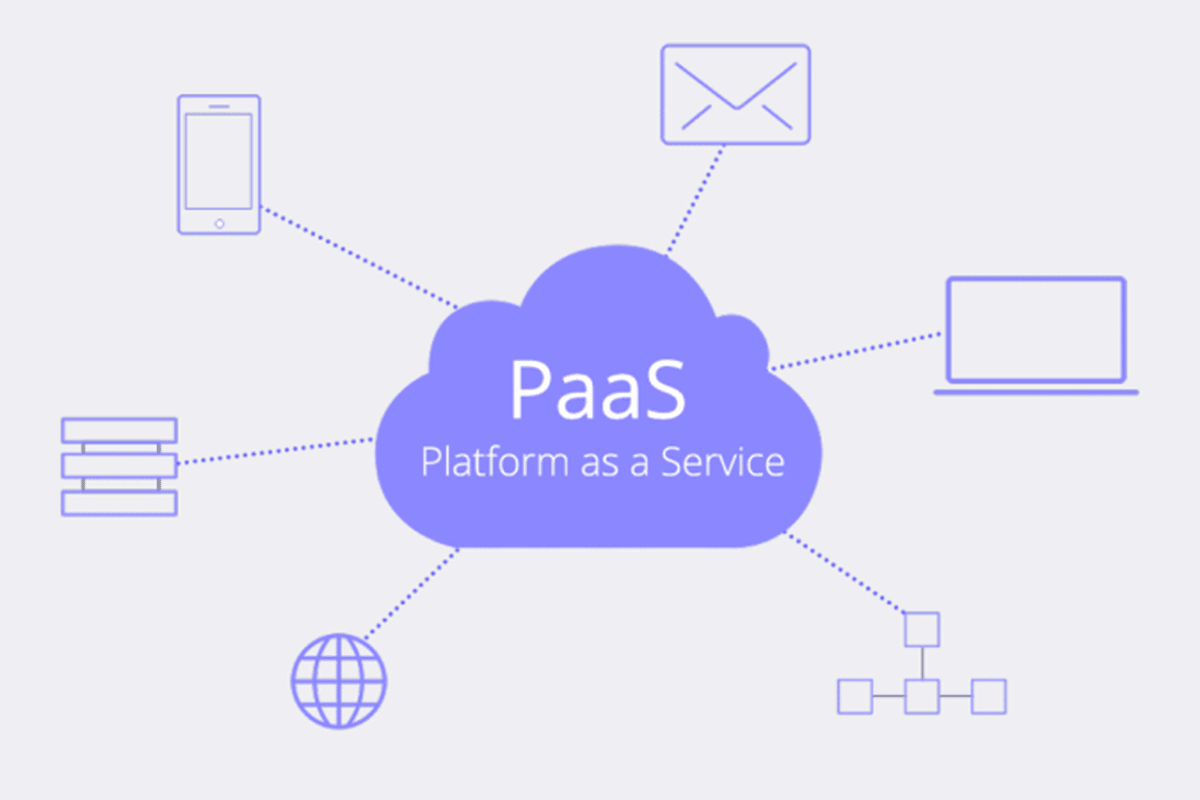
PaaS – Platform-as-a-service. You don’t need to create your own solutions and tools to develop and use complex systems. You can use PaaS, which has everything you need. In the past, developers had to pick and buy a lot of different tools from different vendors. You had to maintain and integrate them, and they needed constant oversight. As the digital product develops, the number of tools used increases, and auxiliary solutions appear. As a result, everything becomes complex, and business processes become cumbersome and unmanageable.
Mobile gadgets will dominate eCommerce.
This trend is supported by the increase in sales: in particular, in 2023, revenue from global retail sales through smartphones rose to 3.57 trillion dollars, compared with a “modest” 2.91 trillion dollars a year earlier. This is not surprising given that there are already 5.3 billion smartphone users worldwide, which is the vast majority of the world’s population.
ERP system or production resource planning system is a software that helps to keep records, plan and distribute all tangible and intangible resources of the company – finance, inventory, raw material stocks and even personnel. Thanks to a competent integrated approach it is possible to increase the productivity of the enterprise, reduce costs, reduce downtime, increase efficiency and, accordingly, profits. This is why such solutions are extremely popular. Implementation of ERP in production requires a careful and thoughtful approach, thorough preparation and readiness for changes on the part of both company management and all its employees.
Email – info@filioforce.ca
Address – 2501-565 Sherbourne st, Toronto, Canada, ON M4X 1W7